GBR Paving Services
Asphalt Repairs & Pavement Overlays
Asphalt Concrete (AC) repairs, overlays, milling, stabilization, and hot rubberized crack sealing.
Asphalt Concrete – AC
Cost-Effective Asphalt Repairs, Engineered to Last
Often times the most expensive part of asphalt maintenance is asphalt repairs. The high cost of materials, the challenge of finding a dump site, and increasing fuel prices make the cost of repairs hard to predict and control. GBR Paving incorporates the latest technologies (such as grind-and-load machines), as well as unique relationships with suppliers, to give you a distinct advantage in scheduling and lowest cost of ownership.
GBR Paving is one of the complete pavement maintenance firms in Southern California. With over 20 years in the business, we are exceptionally qualified to design, scope, and build the most cost-effective solutions for your budget. We can provide scope that ensures a quality bid process, and long-term planning solutions are just one of the advantages you get with GBR Paving. Our asphalt crews can handle any size repair job, including:
AC Overlay
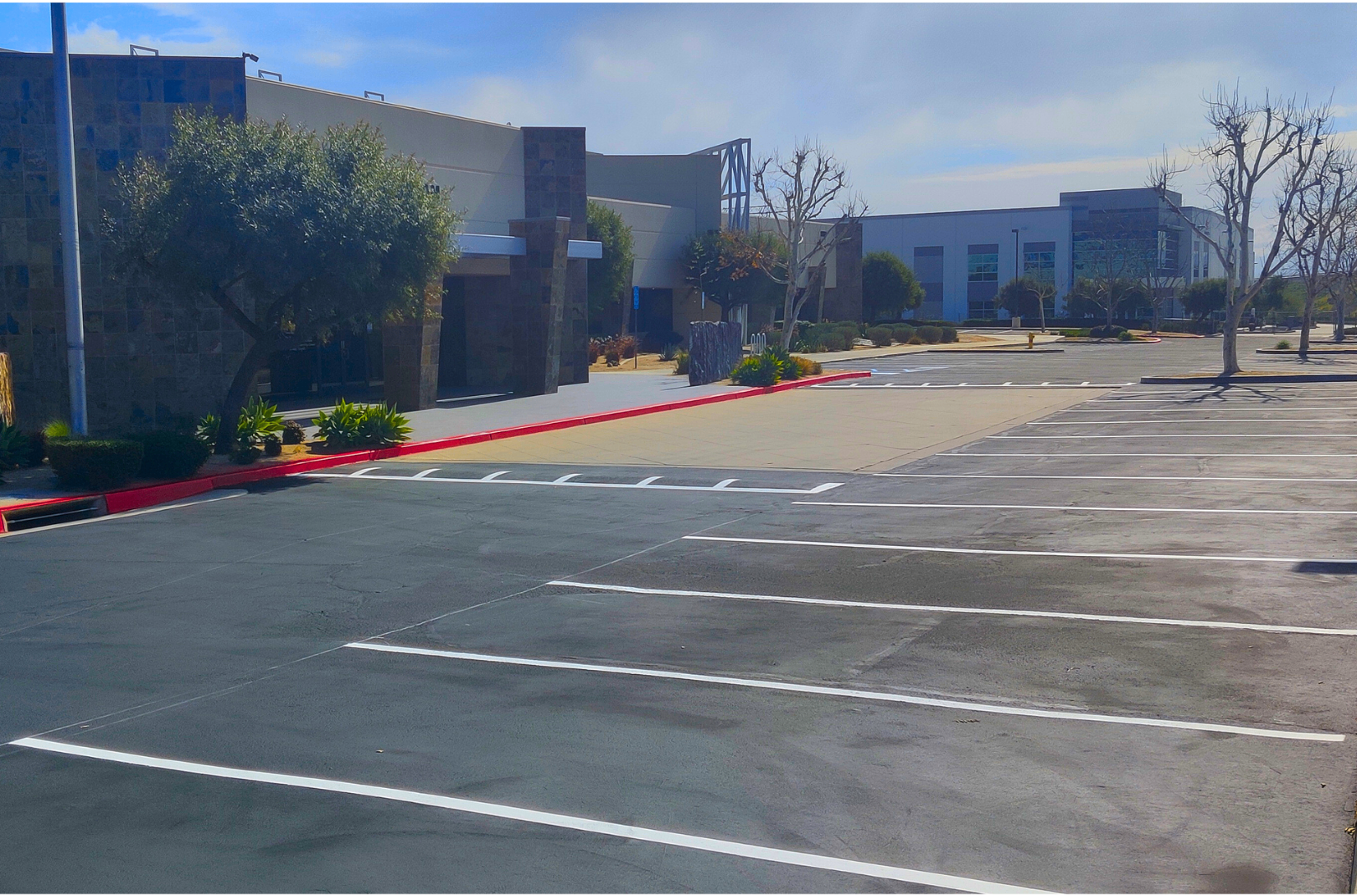
An overlay or resurface can be used on an asphalt driveway, parking lot, or roadway. It consists of installing a new layer of asphalt over the existing asphalt and grinding at transitions (sidewalks, garages, drains, curbs, or other asphalt points). A paving surface can be deteriorated but still maintain structural integrity — in which case an asphalt overlay is the proper solution. An existing asphalt surface is the best base for new asphalt. Damaged areas are repaired first, and sometimes a thin leveling course is installed to take out dips before the finishing course. A tack coat helps the new asphalt adhere to the existing surface. Overlays are usually installed at 1.5"–2" thick depending on the project, are normally less expensive, and deliver the same quality and strength as other asphalt options.
AC Remove and Replace
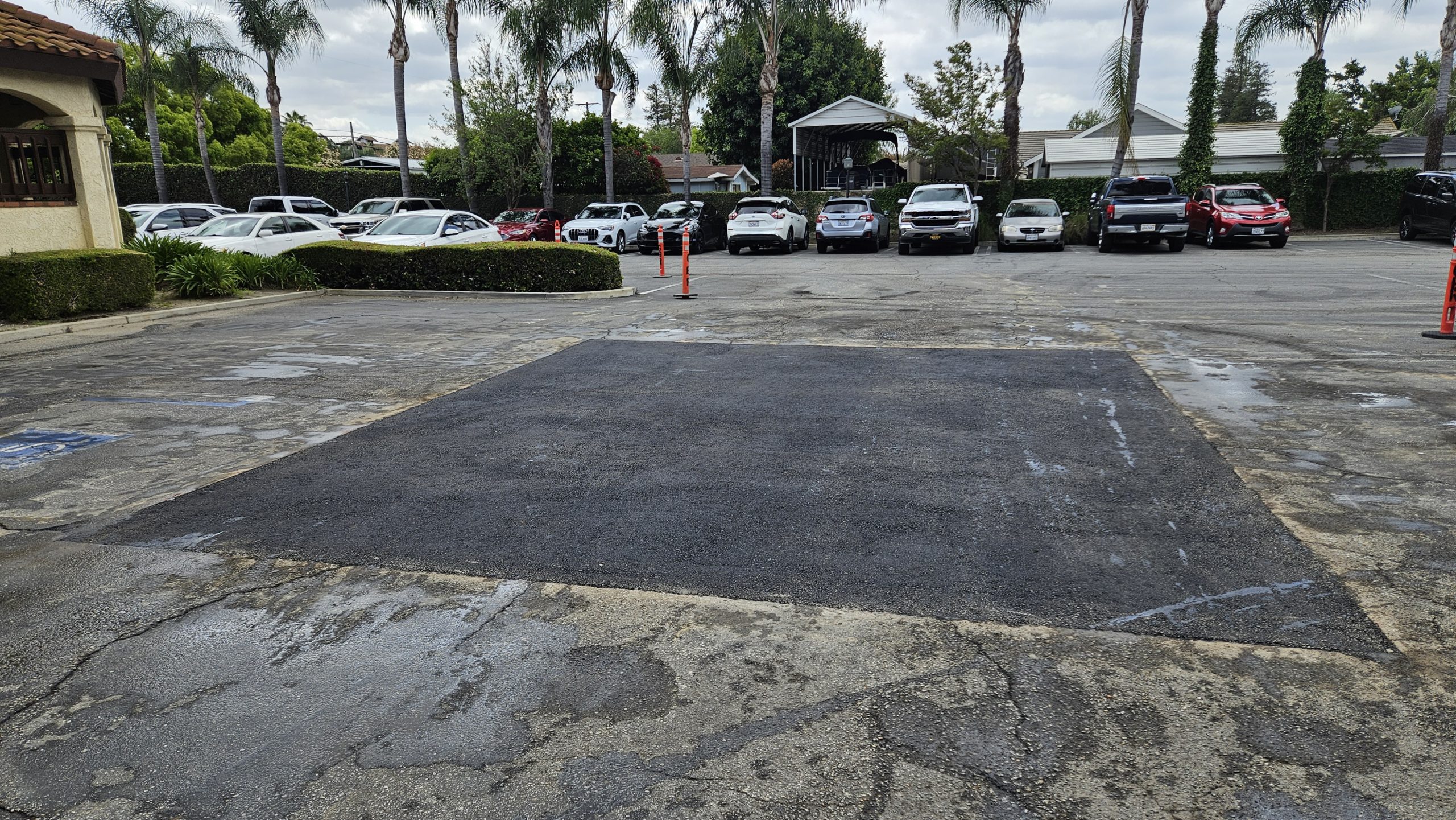
A remove and replace is exactly how it sounds — the existing asphalt is excavated to reveal the gravel base. Any soft sub-base areas are undercut (typically 8" deep) and backfilled with aggregate, then fine-graded. A new layer of asphalt is applied and compacted to proper thickness. Remove and replace is more expensive and should be considered when the existing pavement is weakened by sub-base failure, when there is a drainage issue to fix, or when elevations need to be corrected. Done correctly, it's a great long-term solution.
Petromat — Pavement Reinforcement Fabric
Petromat, the brand name for what is properly termed Pavement Reinforcement Fabric (PRF), is a non-woven polypropylene fabric. When used in combination with an asphalt tack coat, the Petromat System forms an asphalt membrane interlayer within the pavement section. This layer acts as a barrier to surface water infiltration and limits softening of the sub-grade, while absorbing stresses to improve resistance to pavement fatigue and reflective cracking.
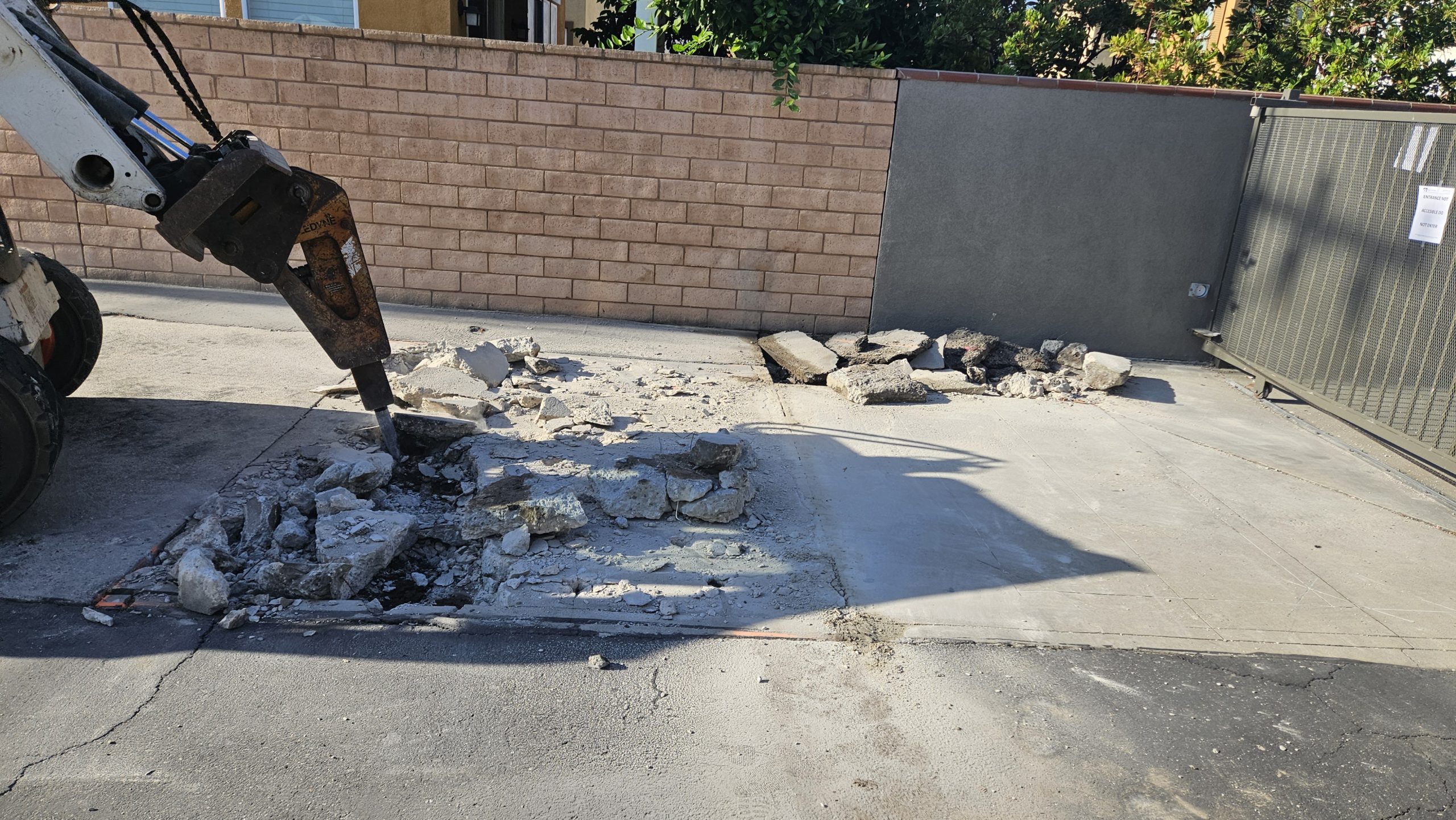
AC Milling
Asphalt milling is easy to confuse with pulverizing, since both involve pulling up and crushing existing pavement. Milling, however, is a recycling and re-paving procedure aimed at removing the top layer of asphalt without disturbing the sub-base. A cold planer drives down the surface, trailing a drumhead of spikes that rip up the asphalt; conveyor belts move the millings into waiting trucks for recycling back at the plant. The intact sub-base allows new asphalt to be installed on top — saving time, money, and the environment. Milling is also used when a roadway has become too elevated due to repeated repaving.
Pulverizing & Stabilization
Pulverizing rips up the existing asphalt in place, leaving several inches of ground-up material as the base for a rebuilt surface. Stabilization is the second step: a mixture of tar and binding/waterproofing agents is overlaid and mixed thoroughly into the crushed asphalt. After roughly a day of hardening, the result is a rebuilt asphalt road or driveway using a minimum of new material — every bit as strong and reliable as the original. The combined process replaces asphalt quickly with minimal cost, effort, and traffic disruption.
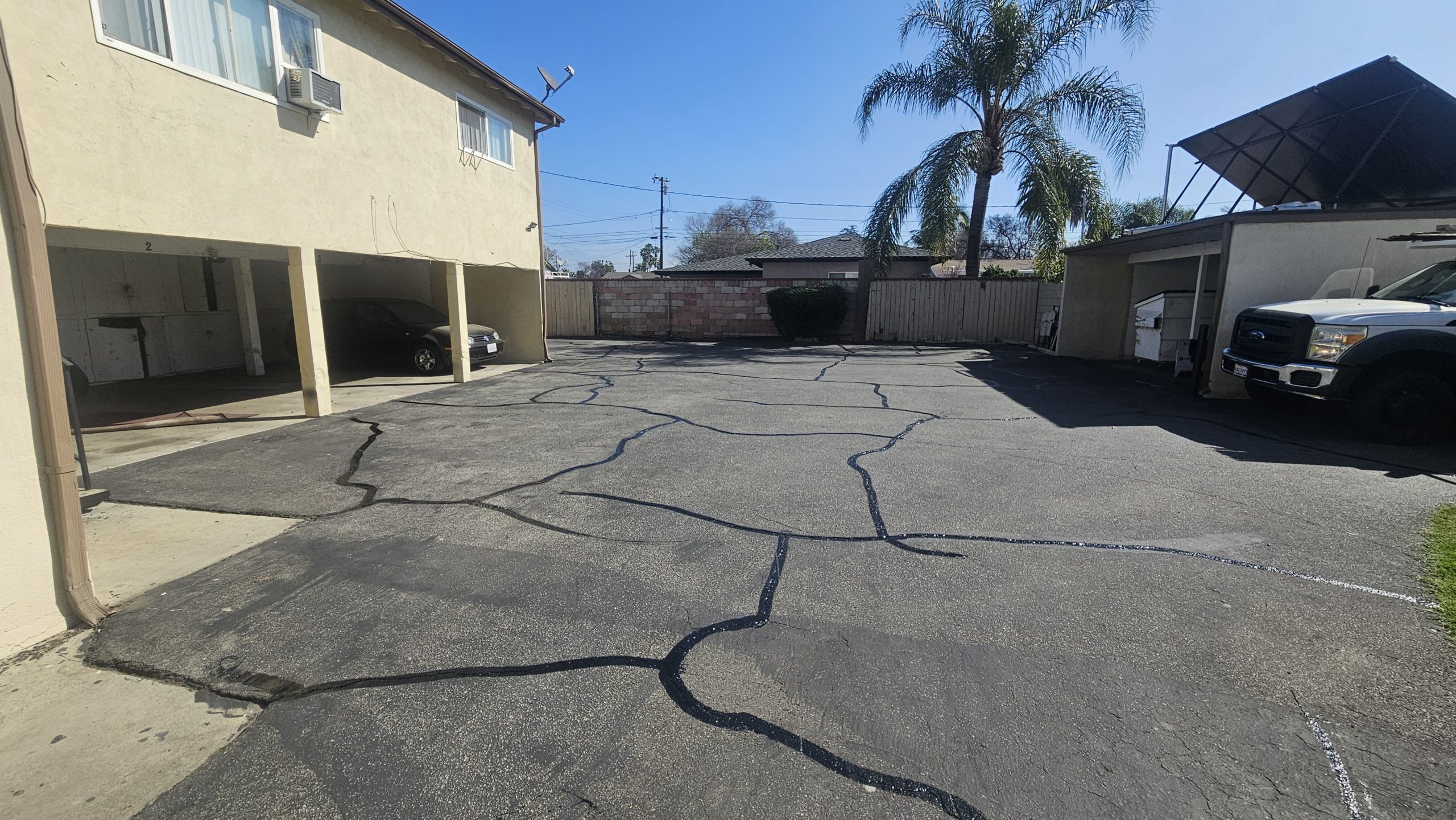
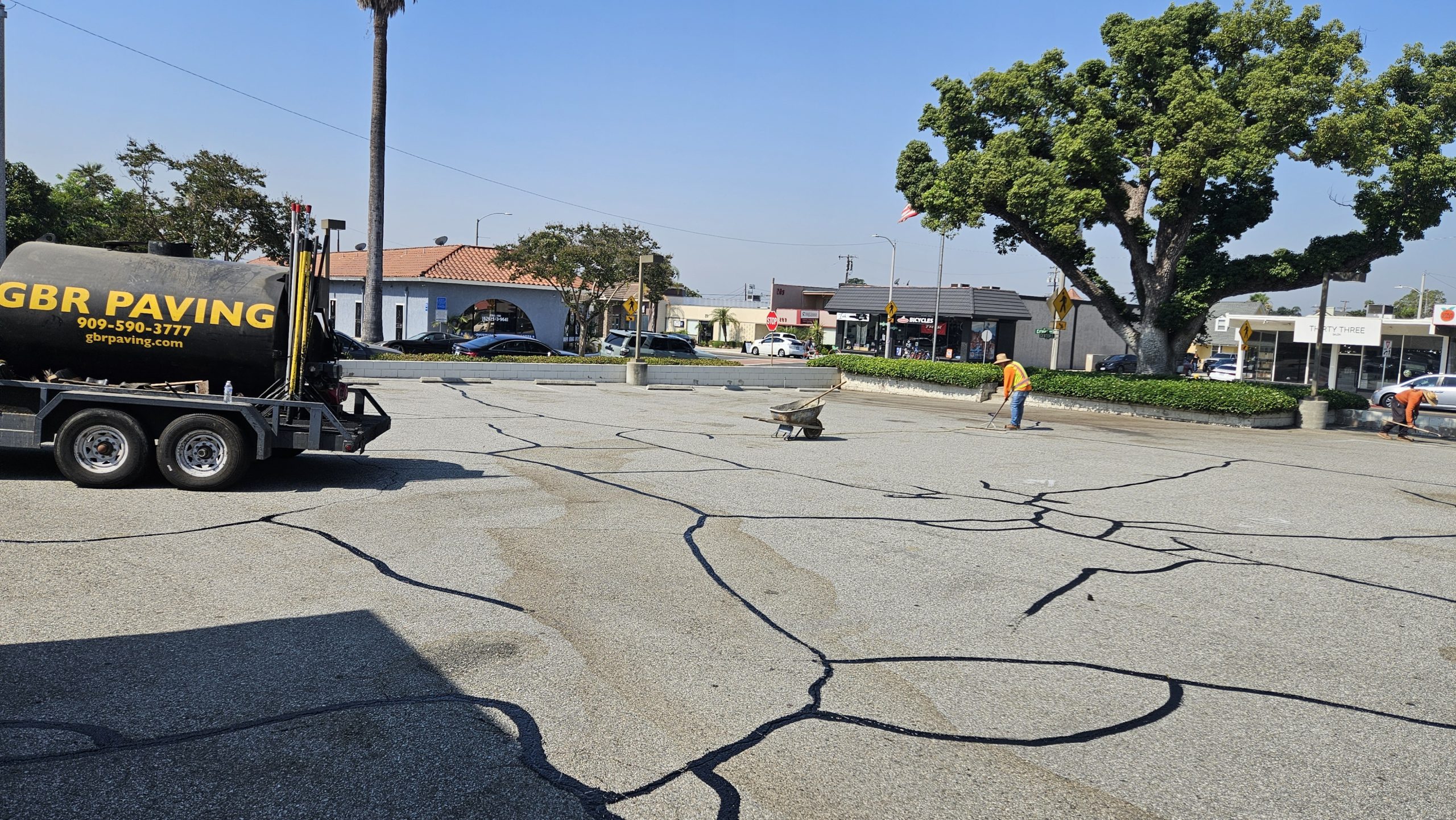
Asphalt Cracks & Hot Rubberized Crack Sealing
Cracking in asphalt is inevitable, and neglect leads to accelerated cracking, potholing, and reduced pavement life. Hot applied rubberized crack sealants — not to be confused with non-elastic cold-applied latex fillers — flex with the pavement through seasonal expansion and contraction, dramatically extending pavement life. Properly installed crack sealing is one of the highest-ROI preventive maintenance steps you can take on any commercial or HOA property.
Petromat
What Petromat Does — and Doesn't Do
Petromat's purpose is to retard crack reflection in asphalt pavement overlays, and to retard water penetration into the pavement's sub-grade when cracks reappear. It is not a cure-all for cracks in asphalt pavement. Owners should expect to see some hairline reflective cracks (above where cracks existed in the prior surface) within the first year of installation. Those cracks will increase over time, but the water-retardant properties of the PRF will keep surface run-off out of the structural asphalt base.
What Is Effective?
In common-interest developments, PRF can extend pavement life by 10 to 15 years. The existing asphalt must be stable and of adequate thickness, and the edges must be milled down to accommodate the overlay. If the existing pavement is too thin, too weak, too old, excessively cracked, has already had a PRF installed, or shows signs of serious sub-grade failure, it's not a good candidate for a PRF overlay. A civil engineer or pavement expert should be consulted to evaluate eligibility.
Is It Hazardous?
PRF is not hazardous to anyone's health. What can be controversial is the difficulty encountered when it's removed. At some point, a PRF will be removed when the entire asphalt section is ground out, and PRF is considered a contaminant at the recycling plant — sometimes incurring additional disposal charges, and occasionally being rejected outright because the fabric melts when heated and adheres to plant equipment.
Every driveway and parking lot is different. Surrounding elevations, drainage, and traffic use all factor into the right course of action. Contact GBR Paving for an appointment with one of our asphalt professionals to determine the correct solution for your project.
Process
AC Milling, Pulverizing & Stabilization
Asphalt Milling
A cold planer removes the top layer of asphalt without disturbing the sub-base. Millings are conveyed into trucks and recycled into new mix back at the plant — saving cost and reducing environmental impact.
Asphalt Pulverizing
A pulverizer rips and crushes the existing asphalt in place, leaving several inches of ground-up material as the base for the next step in the rebuild.
Asphalt Stabilization
A mixture of tar and waterproofing/binding agents is overlaid and mixed into the pulverized asphalt. After hardening, the result is a rebuilt surface as strong and reliable as the original.
Crack Sealing
Hot Rubberized Crack Sealing — Our Process
Hot applied rubberized crack sealants should not be confused with cold-applied latex fillers, which are non-elastic and re-crack as asphalt expands and contracts with temperature. Done right, crack sealing is one of the most cost-effective preventive maintenance steps available.
Cleaning
Cracks are cleaned of all dirt, sand, and debris with a 185 cfm compressor at 110 psi to facilitate adhesion. Vegetation is removed prior, ideally after a weed sterilant has been applied one week ahead.
Heat Lance
A specialized hot-air heat lance, paired with a 185 cfm compressor, produces an air stream that removes all moisture from the cracks to allow proper adhesion of the rubberized sealant.
Grinding
Cracks 1/8" to 3/8" are ground to a minimum of 1/2" wide by 1/2" deep, creating a reservoir that holds more material and bonds better to the crack's sidewalls — for a longer-lasting seal.
Material Application
Rubberized sealant is applied into the prepared cracks at approximately 380°F, forming a flexible, watertight seal that moves with the pavement through temperature cycles.
The key to a good-condition parking lot is preventative or routine maintenance — and proper crack sealing installation. If you have a project to install, contact GBR Paving to install the crack filling system properly and safely.
Project Gallery
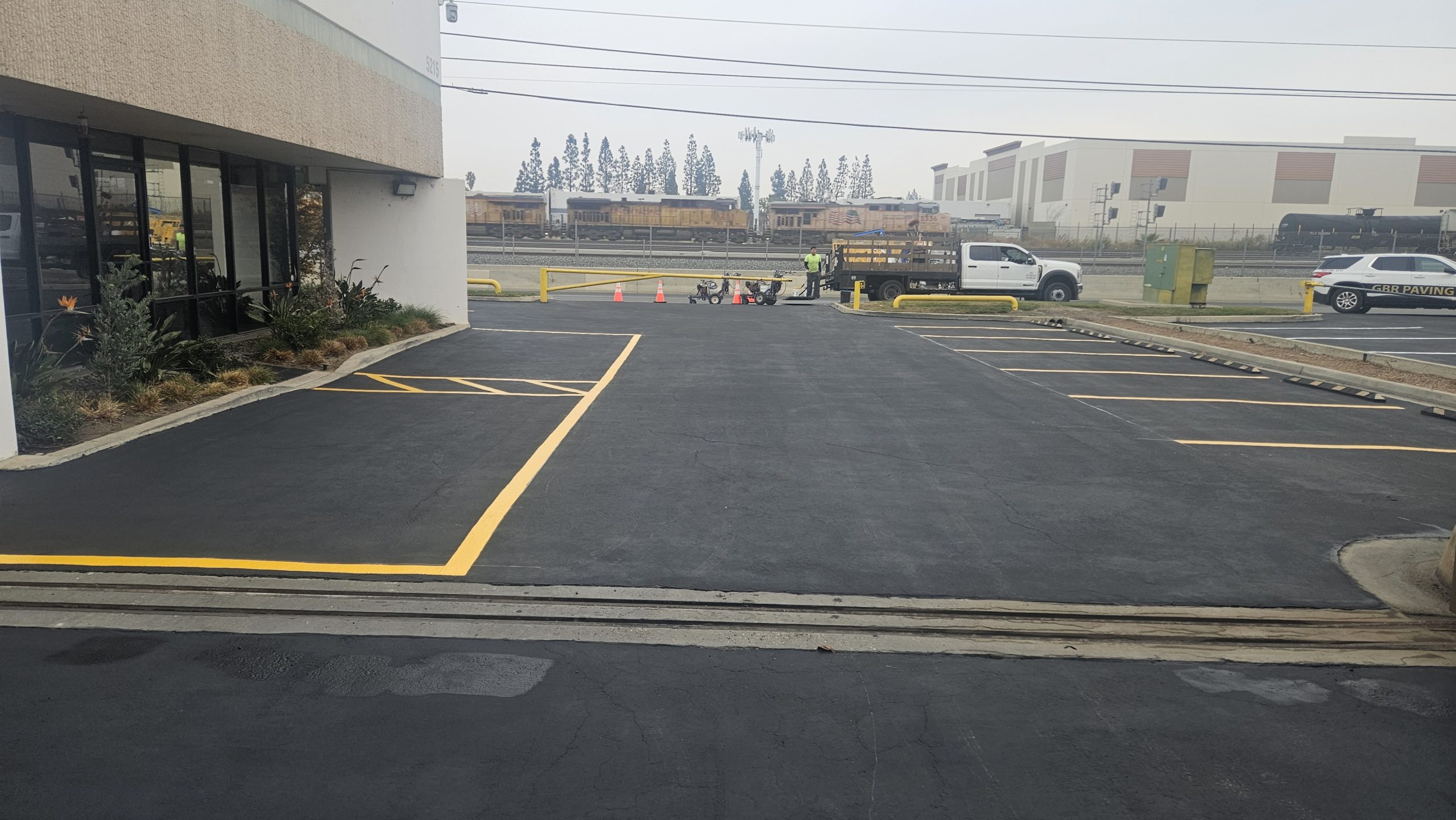
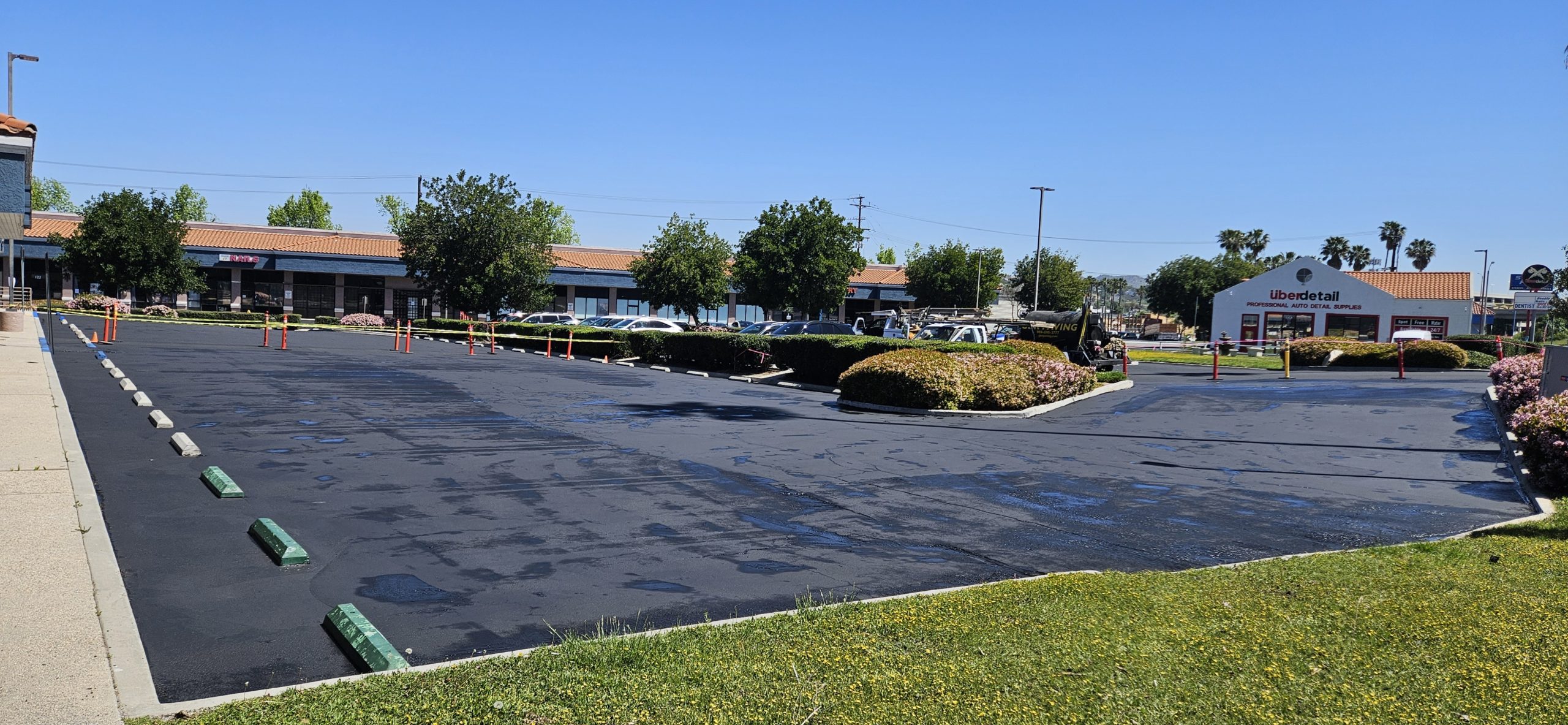
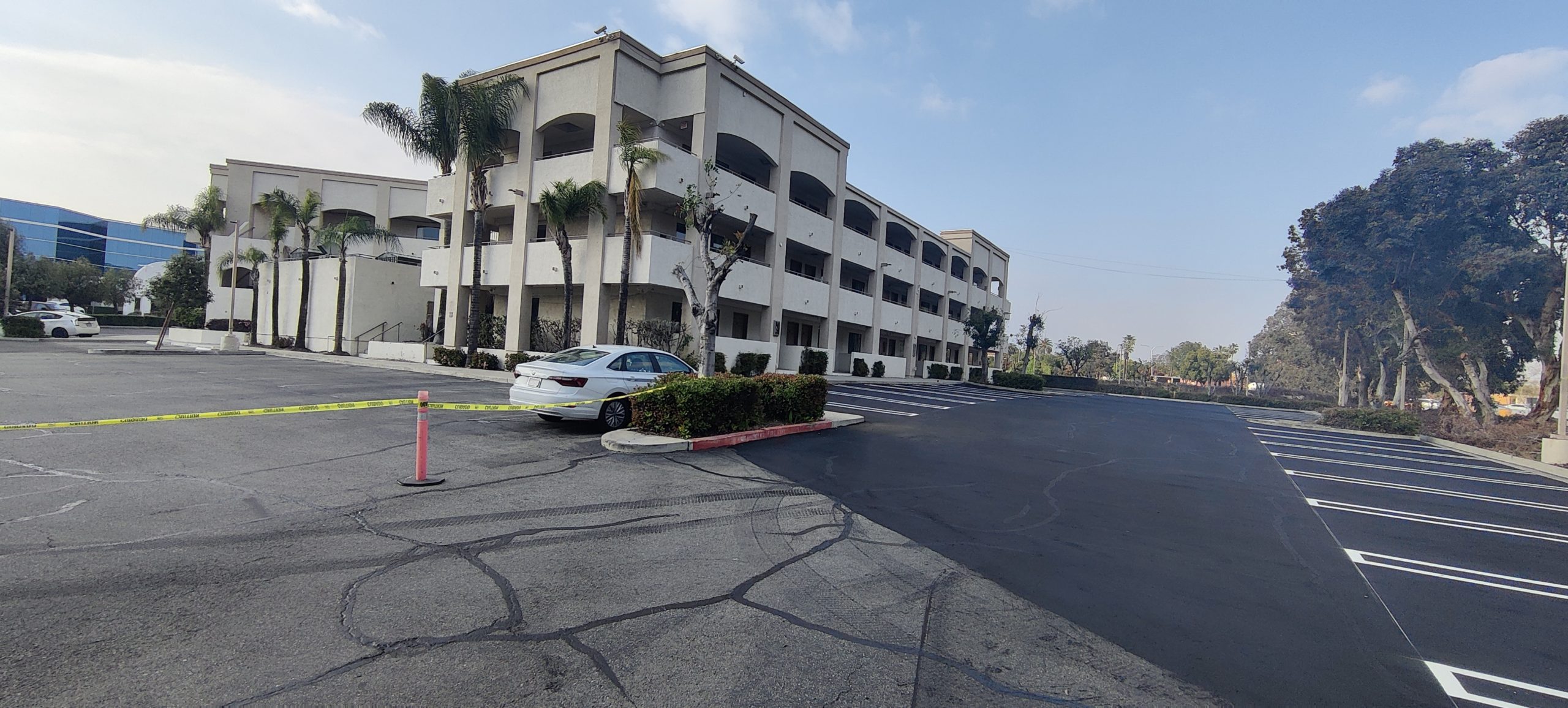
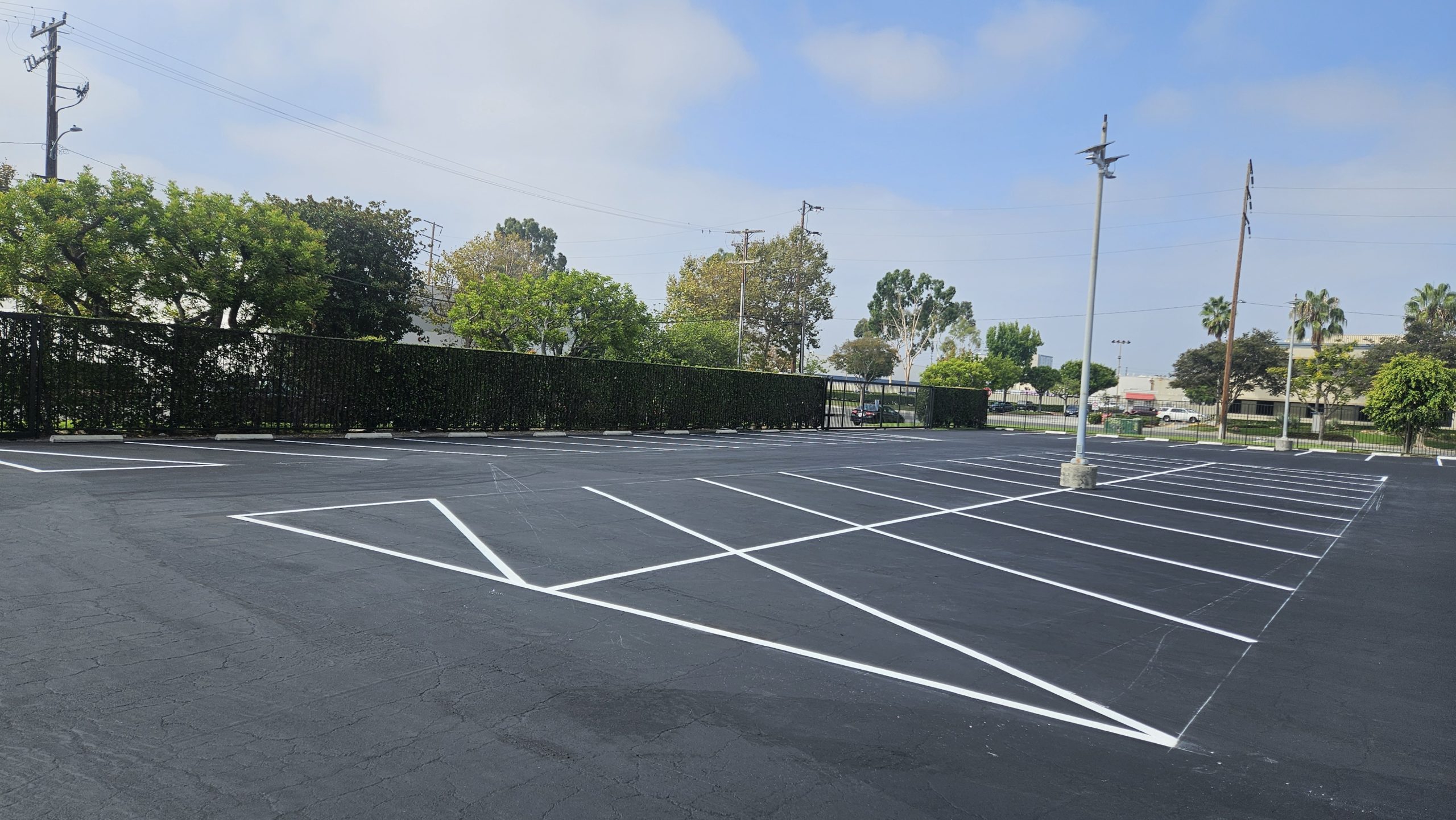
Common Questions About Asphalt Repairs
Related Services